 comparison
Clean Origin Alternative for Engagement: 5 Ring Choices
Table of Contents
- Why Look for a Clean Origin Alternative for Engagement Rings?
- Clean Origin Alternative Comparison at a Glance
- How to Choose a Lab Grown Diamond That Outshines the Rest
- Understanding IGI Certified Lab Diamond Quality and Proof
- Best Lab Grown Diamond Engagement Rings Under $4,500
- Beyond the Ring: Resale, Insurance, and Warranty Logistics
- Conclusion: Secure Your Ethical Engagement Ring Today
- Frequently Asked Questions
Last Updated: September 9, 2026
Why Look for a Clean Origin Alternative for Engagement Rings?
A clean origin alternative for engagement rings is an ethically sourced, lab-grown diamond or non-traditional gemstone that delivers the brilliance of a mined stone without the environmental and humanitarian concerns. Shoppers increasingly want conflict-free, sustainable options, yet many feel trapped between the high markups of traditional jewelers and the impersonal experience of large online-only retailers. The modern couple wants the physical characteristics of a luxury diamond, transparent sourcing, and a price that reflects direct-to-consumer efficiency rather than retail overhead.

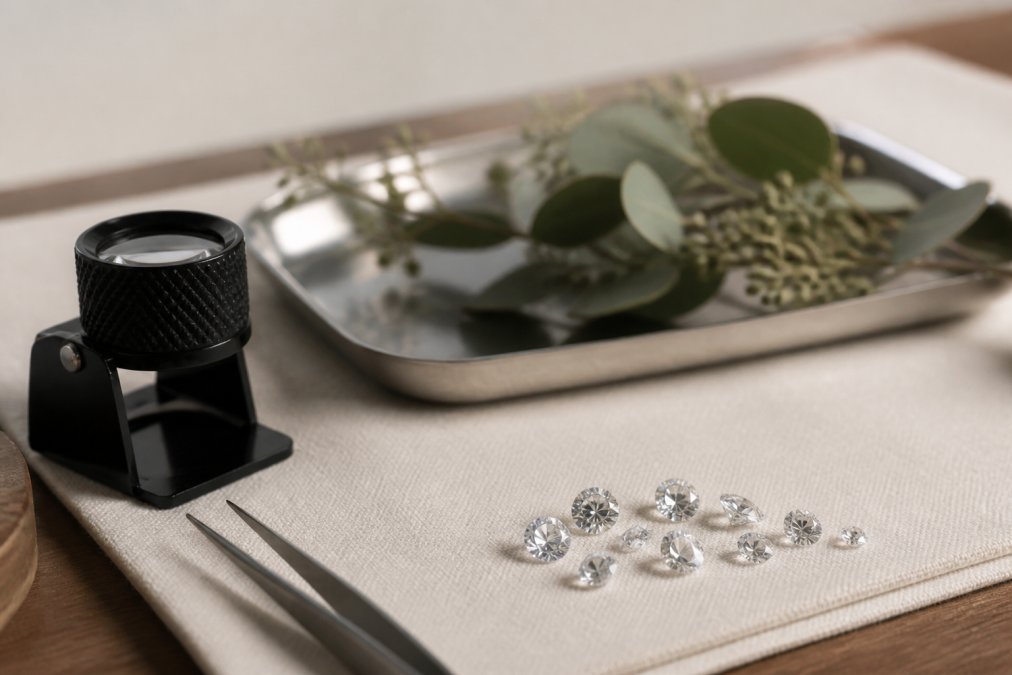
The most compelling reason to explore a clean origin alternative is the combination of affordability and conscience. Lab-grown diamonds share the same chemical composition, optical properties, and hardness as mined diamonds. They are not simulants like cubic zirconia; they are real diamonds, grown under controlled conditions that replicate the earth's natural process. Because they bypass the complex mining supply chain, they reach you at a fraction of the cost of comparable earth-mined stones, allowing you to prioritize a higher carat weight or clarity grade within the same budget.
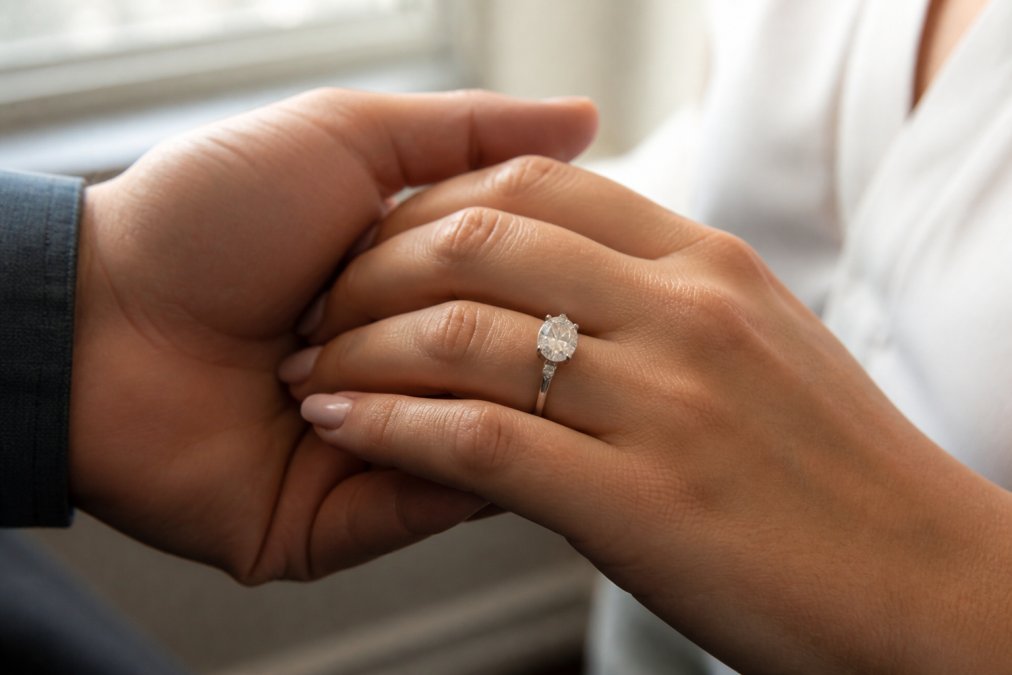
Below, we’ll walk through five specific ring choices that rival the big-name online retailers, compare them at a glance, and cover the hidden logistics of ownership, like insurance and resale, that most guides ignore.
Clean Origin Alternative Comparison at a Glance
When comparing your options, the differences go beyond cut, setting, and total carat weight. The table below summarizes five standout choices from Native Jewel, each offering a distinct silhouette and presence on the finger. But to make a truly informed decision, you need to look at the ownership experience, not just the initial price tag.
| Ring Choice | Center Carat | Setting | Metal | Price | Warranty | Return Policy |
|---|---|---|---|---|---|---|
| Oval Solitaire | 3.0ct | Prong | 14K White Gold | $2,500 | Lifetime | 30-day |
| Pear Cut | 3.05ct | Prong with Pave | 14K Yellow Gold | $3,500 | Lifetime | 30-day |
| Marquise Cut | 3.0ct | Prong with Pave | 14K Yellow Gold | $3,500 | Lifetime | 30-day |
| Radiant Cut | 4.06ct | Prong with Pave | 14K Yellow Gold | $4,500 | Lifetime | 30-day |
| Oval Pavé | 4.01ct | Prong with Pave | 14K Yellow Gold | $4,500 | Lifetime | 30-day |
Each of these rings is IGI certified, D colorless, VS1 clarity, and cut to Excellent proportions. The primary difference is the shape and how it flatters the wearer’s hand. If you are searching for the best lab grown diamond engagement rings, this lineup proves that ethical sourcing no longer requires compromising on size or quality.

What the Warranty and Return Policy Actually Mean for You
A lifetime warranty is not a marketing gimmick, it is a direct signal of confidence in the craftsmanship. A lifetime warranty on all diamond jewelry covers the structural integrity of the setting, including prong tightening, stone resetting, and band repairs due to normal wear. This is critical because prongs can loosen over time, especially with daily wear in 14K gold, which is softer than platinum or palladium.
A 30-day return policy is equally important, but it serves a different purpose. It gives you the security to inspect the ring in person, verify the stone against its IGI report, and confirm that the proportions feel right on your partner’s finger. Native Jewel offers a 30-day hassle-free return policy, which removes the financial risk of buying a ring sight unseen.
The Hidden Cost of Ownership: Maintenance and Resizing
What most comparison guides ignore is the long-term cost of maintaining a ring. A pave band requires more frequent inspection because the small side stones are more susceptible to loosening. A solitaire, by contrast, has fewer points of failure. Over a 10-year period, the difference in maintenance costs can be significant, not because the ring is poorly made, but because the design inherently requires more attention.
Resizing is another factor. Most rings can be resized up or down by one to two sizes, but the metal and setting matter. A 14K yellow gold band is easier to resize than a white gold band with pave stones, which may require re-tipping or re-setting the side stones after the resize.
This level of transparency is what separates a direct-to-consumer jeweler from a traditional retailer. The lower price is not a reflection of lower quality, it is a reflection of a business model that does not need to mark up the price to cover a network of physical stores and commissioned sales staff.
How to Choose a Lab Grown Diamond That Outshines the Rest
Choosing a lab grown diamond begins with the cut, because it drives the stone’s brilliance, fire, and scintillation. A well-proportioned cut makes a stone appear larger and livelier, while a poor cut leaves even a high-carat diamond looking dull. Prioritize an Excellent cut grade above all other factors.

Next, consider the shape. Oval cuts are the most searched engagement ring shape because their elongated silhouette creates a flattering, finger-lengthening effect. Pear and marquise cuts offer a vintage-inspired elegance that maximizes visual size, while radiant cuts deliver a bold, step-heavy brilliance that catches light from every angle.
Finally, balance the 4 Cs within your budget. Because lab-grown stones cost less than mined equivalents, you can often step up a full carat or more without stretching your spending. This is where the value proposition of a clean origin alternative becomes tangible: you are not settling for a smaller stone to afford a better color grade.
Understanding IGI Certified Lab Diamond Quality and Proof
IGI certified lab diamond quality refers to a grading report issued by the International Gemological Institute, an independent laboratory that verifies a stone’s carat weight, color, clarity, and cut. This certification is your proof that the diamond is real, lab-grown, and precisely as described, not a look-alike simulant.
When you purchase an IGI-certified stone, you receive a report with a unique number that corresponds to the diamond. This number is often laser-inscribed on the girdle of the stone, allowing you to verify its identity independently.
A common mistake is confusing lab-grown diamonds with diamond simulants. A simulant, like cubic zirconia or moissanite, mimics the look of a diamond but has different chemical and physical properties. A lab-grown diamond is chemically and optically identical to a mined diamond; the only difference is its origin. The grading report confirms this distinction.
Best Lab Grown Diamond Engagement Rings Under $4,500
The following rings represent the best lab grown diamond engagement rings under $4,500, each selected for its exceptional cut, colorless grade, and craftsmanship. They prove that a substantial, heirloom-quality ring is achievable without the traditional retail markup.
Oval Brilliance in 14K White Gold: The Classic Solitaire
Our top pick for a clean origin alternative is the Oval Lab Grown Diamond Engagement Ring | 3.6ct IGI Certified | 14K White Gold Solitaire. This ring features a 3.0ct oval center stone graded D colorless with VS1 clarity, set in a classic prong setting on a band of 14K white gold. The solitaire design lets the stone take center stage, maximizing its brilliance without distraction.
Priced at $2,500, this ring delivers the look of a much larger investment. The 14K white gold offers a bright, modern finish that complements the colorless stone, and the prong setting allows maximum light to enter the diamond, enhancing its fire and scintillation.
Pear and Marquise Cuts: Vintage-Inspired Elegance
For those drawn to vintage-inspired silhouettes, the pear and marquise cuts offer drama and sophistication. The Pear Lab Grown Diamond Engagement Ring | 3.55ct IGI Certified | 14K Yellow Gold pairs a 3.05ct pear center with a delicate pave of side stones, totaling 3.55 carats. Its teardrop shape is both romantic and distinctive, and the warm 14K yellow gold adds a heirloom character that white metals cannot replicate.
The Marquise Cut Lab Grown Diamond Engagement Ring | 3.75ct IGI Certified | 14K Yellow Gold Pavé is bolder still. With a 3ct marquise center and roughly 0.75ctw of pave side stones, its elongated silhouette maximizes visual size and creates a supremely flattering look on the finger. Both rings are priced at $3,500.
Beyond the Ring: Resale, Insurance, and Warranty Logistics
The conversation about lab-grown diamonds rarely covers what happens after the proposal, but the logistics of ownership are where the real differences between retailers emerge. A clean origin alternative is a significant purchase, and protecting it requires planning.
Insurance: How to Properly Insure a Lab-Grown Diamond
A standard homeowner’s or renter’s policy typically provides only $1,000 to $2,000 of coverage for jewelry, which is far below the replacement value of a $2,500+ ring. To adequately protect your purchase, you need a separate jewelry rider or a standalone policy. The process requires documentation:
- Obtain a recent appraisal. Your IGI report proves the diamond’s quality, but an appraisal provides the current retail replacement value that insurers require. You can use an independent appraiser accredited by the American Gem Society (AGS) or the International Society of Appraisers (ISA).
- Choose a policy type. A scheduled rider on your existing homeowner’s policy is often an affordable option. A standalone policy from a specialty insurer offers broader coverage, including accidental loss and mysterious disappearance, which is not always covered by a standard rider.
- Keep your documentation safe. Your IGI grading report, the original purchase receipt, and the appraisal are the three documents you will need to file a claim. Store digital copies in a cloud service and physical copies in a safe deposit box.
Resale Value: The Honest Truth About Lab-Grown Diamonds
It is honest to note that lab-grown diamonds do not hold the same resale value as rare, mined stones. They are valued for their beauty and ethical sourcing rather than as a finite commodity. The secondary market is still developing, and current resale prices typically range from 10% to 30% of the original purchase price. This is a stark contrast to mined diamonds, which historically retain 30% to 50% of their value, though that figure is also declining as lab-grown options become more mainstream.
This does not mean a lab-grown diamond is a poor purchase, it means you should approach it with the right mindset. A lab-grown diamond is a purchase of craftsmanship, experience, and daily beauty, not a financial asset. If you are buying a ring with the expectation of selling it later, a lab-grown stone is not the right choice.
Warranty Terms: What to Look For and What to Avoid
Not all warranties are created equal. Native Jewel offers a lifetime warranty on all diamond jewelry, covering the structural integrity of the ring, including prong tightening, stone replacement (for pave stones that fall out), and band repairs due to normal wear. It does not cover damage caused by accidents, such as bending the band or chipping the diamond, that is what insurance is for.
Before you commit to a retailer, ask these three questions:
- Does the warranty cover prong re-tipping? It is not always covered.
- Does the warranty cover stone replacement if a pave stone falls out?
- Is resizing included?
A direct-to-consumer jeweler can offer lower prices because it eliminates the middleman, not because it cuts corners on quality. The proof is in the IGI certification and the warranty that backs the craftsmanship. When you find a retailer that offers a lifetime warranty, a 30-day return policy, and transparent insurance guidance, you have found a partner invested in your ring’s longevity, not just its initial sale.
Conclusion: Secure Your Ethical Engagement Ring Today
Choosing the right ring involves balancing beauty, ethics, and budget, a task that feels overwhelming when you are spending thousands of dollars. The clean origin alternative solves this by offering lab-grown diamonds that are indistinguishable from mined stones to the naked eye, yet far more affordable and conflict-free. When you choose a ring from Native Jewel, you get an IGI-certified, D colorless diamond set in handcrafted 14K gold, backed by a lifetime warranty and a 30-day hassle-free return policy.
Frequently Asked Questions
Is a Clean Origin alternative cheaper for engagement rings?
Yes, direct-to-consumer brands like Native Jewel offer lab-grown diamond engagement rings with significant savings compared to traditional retailers. By selling online without a physical showroom markup, you can find IGI-certified rings with D-color and VS1 clarity for under $4,500. This pricing reflects the supply chain efficiency rather than lower quality, so you get a larger carat weight for your budget.
How do I verify IGI certified lab diamond quality before buying?
Always look for a certification number from an independent laboratory like IGI. Reputable sellers provide this documentation before purchase. You can cross-reference the number on the IGI website to confirm the diamond's carat weight, color, clarity, and cut grade. This ensures you are getting exactly what is advertised and protects your investment for future appraisals.
What happens if the ring size is wrong when it arrives?
Native Jewel offers a 30-day hassle-free return policy. If the sizing is off, contact customer support immediately to arrange a resize or exchange. It is wise to have your finger professionally measured before ordering, and Native Jewel will stand behind the fit and ensure the ring is perfect for your proposal.
Are lab-grown diamond engagement rings durable for everyday wear?
Lab-grown diamonds have the same physical and chemical properties as natural diamonds, scoring a 10 on the Mohs hardness scale. They are perfectly suited for everyday wear. The 14K gold settings are also durable. A lifetime warranty on craftsmanship covers normal wear, ensuring prongs and settings remain secure.
Get started with Native Jewel and secure an ethically sourced engagement ring that delivers exceptional quality and lasting elegance.