 ultimate-guide
Are Lab Grown Diamonds Real? A 2026 Guide
Table of Contents
- Are Lab Grown Diamonds Real Diamonds?
- How Lab Grown Diamonds Are Made: HPHT and CVD Explained
- Lab Grown vs Natural Diamonds: A Side-by-Side Comparison
- How to Identify Lab Grown Diamonds
- Lab Grown Diamond Resale Value and Investment Potential
- Insurance, Appraisal, and Long-Term Care for Lab Grown Diamonds
- Ethical Sourcing, Sustainability, and What the FTC Says
- Frequently Asked Questions
Last Updated: September 1, 2026
Are Lab Grown Diamonds Real Diamonds?
Lab grown diamonds are real diamonds. This is a scientific fact confirmed by gemological laboratories, the Federal Trade Commission, and every major grading institution in the industry. A lab grown diamond is chemically, physically, and optically identical to a mined diamond.

The confusion is understandable. "Lab grown" sounds like it might mean "simulated" or "fake." It doesn't. A simulated diamond is a different material altogether, cubic zirconia, moissanite, or glass, that merely resembles a diamond. A lab grown diamond is a diamond, grown under controlled conditions that replicate the geological processes occurring miles beneath the earth's surface.
Chemical Composition and Atomic Structure
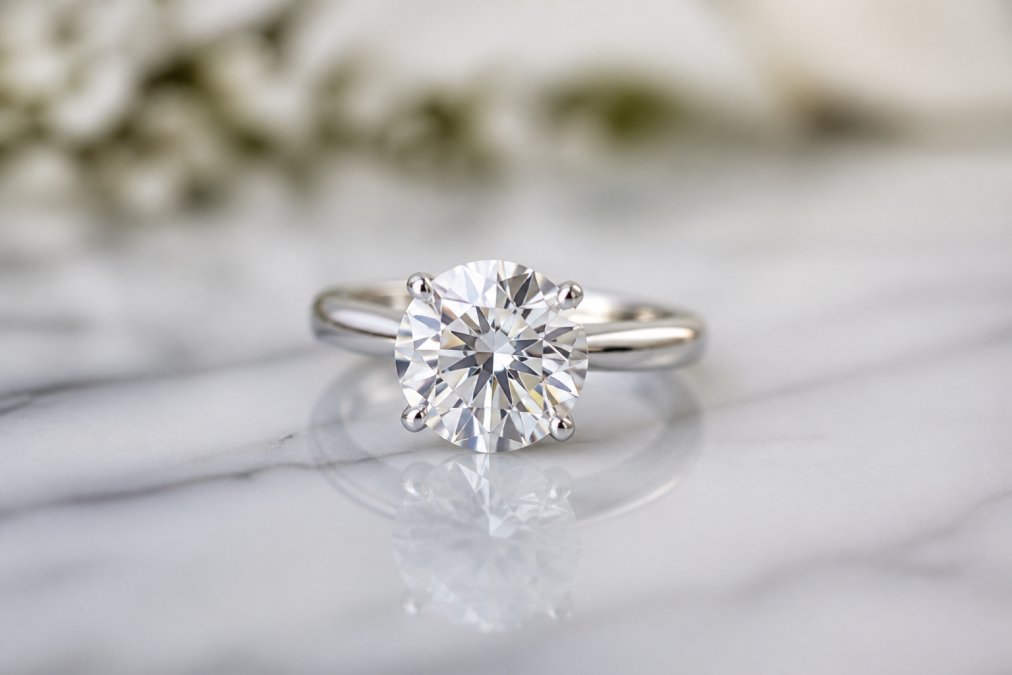
A diamond is defined by its chemical composition: pure carbon atoms arranged in a crystal lattice structure called a diamond cubic. Both mined and lab grown diamonds share this exact atomic structure. According to the Gemological Institute of America's diamond grading resources, lab grown diamonds have the same chemical composition, crystal structure, and physical properties as natural diamonds. This atomic structure gives diamonds their extraordinary hardness, thermal conductivity, and optical brilliance.
Hardness, Optical Properties, and the Mohs Scale
On the Mohs scale of mineral hardness, diamond ranks 10, the highest rating possible. Lab grown diamonds score identically. Nothing scratches a diamond except another diamond, regardless of whether it was formed over billions of years underground or over weeks in a laboratory.
Both types share the same refractive index, thermal conductivity, and capacity for fire and brilliance when cut correctly. A well-cut lab grown diamond will outperform a poorly cut mined diamond. Cut quality, carat weight, clarity, and color grade determine how a diamond looks, factors that apply equally to both types.
How Lab Grown Diamonds Are Made: HPHT and CVD Explained
Two primary methods produce lab grown diamonds. Neither process involves glue, coating, or synthetic shortcuts. Both replicate the conditions under which natural diamonds form.
HPHT (High Pressure High Temperature) subjects a carbon source to extreme pressure, roughly 1.5 million pounds per square inch, and temperatures exceeding 2,000 degrees Celsius (peer-reviewed research). Carbon crystallizes around a diamond seed and grows into a full diamond over days or weeks.
CVD (Chemical Vapor Deposition) places a diamond seed in a chamber filled with carbon-rich gases. Microwave energy breaks down the gas molecules, allowing carbon atoms to deposit layer by layer onto the seed. Both methods produce stones requiring the same cutting and polishing as mined diamonds.
The Diamond Seed Process
A diamond seed is a thin slice of an existing diamond, typically a few millimeters across, serving as the crystalline template around which new diamond material grows. The resulting stone is a continuous crystal, not a coating over a seed. When a gemologist examines a finished lab grown diamond, the seed is indistinguishable from the rest of the material. The growth is real diamond formation, accelerated by technology rather than geological time.
Lab Grown vs Natural Diamonds: A Side-by-Side Comparison
The most practical question is: what actually differs between these two stones? The honest answer is origin, price, and resale behavior. Everything else, brilliance, hardness, grading standards, is the same.
| Feature | Lab Grown Diamond | Natural Diamond |
|---|---|---|
| Chemical composition | Pure carbon (identical) | Pure carbon (identical) |
| Hardness (Mohs scale) | 10 | 10 |
| Refractive index | Same | Same |
| Grading standards | IGI, GIA, AGS | IGI, GIA, AGS |
| Origin | Laboratory (HPHT or CVD) | Mined from earth |
| Pricing | Significantly lower | Higher |
| Resale value | Depreciates more sharply | Depreciates; holds more value |
| Ethical sourcing | No mining required | Varies by source |
| Environmental impact | Lower (no excavation) | Higher |
Certification and Grading Standards
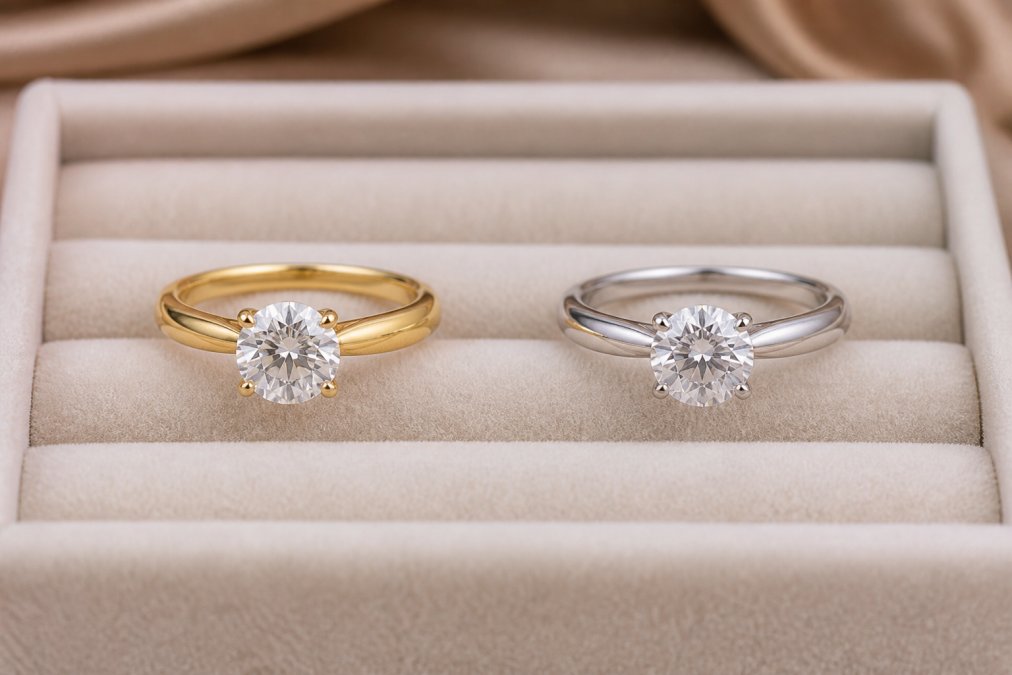
Lab grown diamonds are graded by the same gemological laboratories that grade mined diamonds, using the same criteria: cut, color, clarity, and carat weight. The International Gemological Institute (IGI) and the Gemological Institute of America (GIA) both issue grading reports for lab grown diamonds. Every Native Jewel diamond comes with IGI certification, providing a detailed grading report and often a laser inscription on the girdle linking the stone to its report.
How to Identify Lab Grown Diamonds
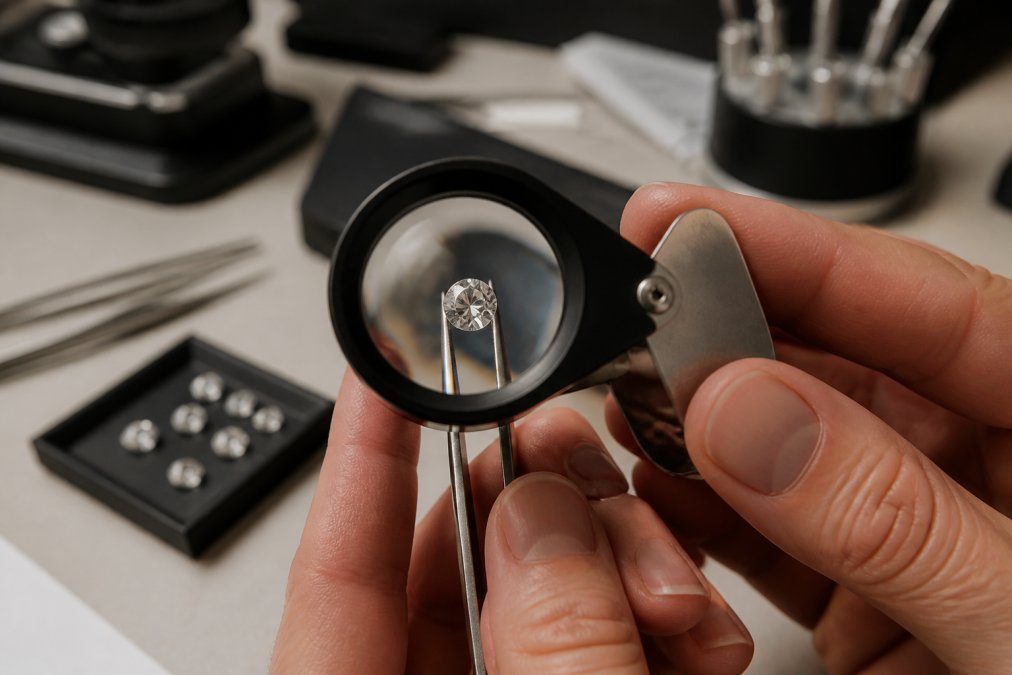
Identifying lab grown diamonds requires spectroscopic analysis, equipment most consumers will never own. To the naked eye and under standard jeweler's loupe magnification, a lab grown diamond and a mined diamond are indistinguishable.
Gemological laboratories use infrared spectroscopy and photoluminescence spectroscopy to detect trace elements and growth patterns that differ between lab grown and mined stones. These differences do not affect appearance, hardness, or optical properties. According to the FTC's guidance on diamond marketing, sellers are required to disclose when a diamond is lab grown.
Lab Grown Diamond Resale Value and Investment Potential
Lab grown diamonds have experienced significant price depreciation as production technology has improved and supply has increased. The depreciation for lab grown stones has been steeper than for mined diamonds, as production costs fall and new lab grown diamonds become less expensive.
Buy a lab grown diamond for its beauty and value as jewelry, not as a financial investment. The lower purchase price allows many buyers to choose a larger stone or higher color and clarity grade than they could afford in a mined equivalent. A 3.6ct oval cut, D colorless, VS1 clarity stone with an excellent cut, like the IGI-certified ring available from Native Jewel at $3,500, would cost a multiple of that price in a mined equivalent.

Insurance, Appraisal, and Long-Term Care for Lab Grown Diamonds
Insurance: Lab grown diamonds can and should be insured like mined diamonds. Most jewelry insurance providers cover them without restriction. Obtain a current appraisal reflecting replacement value, not resale value. Request an updated appraisal every two to three years, as lab grown diamond prices have shifted significantly.
Appraisal nuances: Some appraisers are not yet current on lab grown diamond pricing. Seek an appraiser who specializes in or is current on lab grown diamond market values.
Long-term durability: A lab grown diamond is as durable as any mined diamond. At 10 on the Mohs scale, it will not scratch from everyday wear. A 14K gold setting offers a practical balance of durability and workability for resizing and repairs.

Post-purchase maintenance: Clean lab grown diamonds with warm water, mild dish soap, and a soft brush. Ultrasonic cleaners are generally safe for diamonds in secure settings, but consult your jeweler before using one if your setting includes pavé stones or intricate prong work. Annual professional inspections catch prong wear before stones become loose.
Ethical Sourcing, Sustainability, and What the FTC Says
The ethical case for lab grown diamonds is straightforward: no mining means no excavation, no community displacement, and no participation in supply chains that are difficult to trace. Lab grown diamonds are produced in controlled facilities with known inputs and documented processes.
Lab grown diamond production requires significant energy, and the environmental footprint depends on the energy source used by the production facility. Facilities powered by renewable energy have substantially lower carbon impact than those relying on fossil fuels.
The Federal Trade Commission revised its guidance to affirm that lab grown diamonds are diamonds, not "synthetic" or "artificial" in any pejorative sense. The FTC requires sellers to clearly disclose a diamond's origin, but does not permit language implying lab grown diamonds are inferior or fake. For buyers prioritizing ethical sourcing, a lab grown diamond offers a traceable, documented origin that mined diamonds often cannot match with equal certainty.
The question "are lab grown diamonds real?" has a definitive answer: yes. The harder question is whether a lab grown diamond is the right choice for you, depending on your priorities around size, budget, resale expectations, and ethical considerations. Native Jewel's collection of IGI-certified lab grown diamond rings, set in handcrafted 14K gold, is designed for buyers who want genuine diamond quality with transparent sourcing and exceptional craftsmanship.
Frequently Asked Questions
Are lab grown diamonds considered fake?
No. Lab grown diamonds are not fake, they are not simulants like cubic zirconia or moissanite. They share the exact same chemical composition (pure carbon), atomic structure, hardness (10 on the Mohs scale), refractive index, and optical properties as mined diamonds. The Federal Trade Commission updated its guidelines to recognize lab grown diamonds simply as 'diamonds,' requiring only that sellers disclose the origin. Gemological laboratories like IGI grade them using the same 4Cs standards applied to mined stones.
Do lab grown diamonds pass a diamond tester?
Yes. Standard diamond testers measure thermal conductivity, and lab grown diamonds conduct heat identically to mined diamonds, so they pass every basic tester. More advanced spectroscopic analysis equipment used by gemological laboratories can distinguish origin, but a typical handheld tester at a jewelry counter cannot tell the difference. This further confirms that lab grown diamonds are physically and chemically identical to their mined counterparts.
What are the downsides of lab grown diamonds?
The main downside is resale value. Lab grown diamond prices have dropped significantly as production has scaled, and the secondary market offers limited returns compared to purchase price. They are not a financial investment in the traditional sense. Some buyers also place sentimental value on the geological rarity of mined diamonds. That said, for buyers prioritizing size, quality, and ethical sourcing at a given budget, lab grown diamonds offer clear advantages in carat weight and certification quality per dollar spent.
Is a lab-grown diamond worth buying for an engagement ring?
For most buyers, yes. Lab grown diamonds carry IGI certification with the same 4Cs grading, carat weight, clarity, color grade, and cut quality, as mined diamonds. A budget of $2,100 to $3,500 at Native Jewel gets you a D-colorless, VS1-clarity stone in 2ct to 3.6ct sizes in 14K gold, with a lifetime warranty included. If maximizing size and quality within budget matters more than geological origin or resale speculation, a lab grown diamond engagement ring is a sound, well-supported choice.
This article was written using GrandRanker
Frequently Asked Questions
Are lab grown diamonds considered fake?
No. Lab grown diamonds are not fake — they are not simulants like cubic zirconia or moissanite. They share the exact same chemical composition (pure carbon), atomic structure, hardness (10 on the Mohs scale), refractive index, and optical properties as mined diamonds. The Federal Trade Commission updated its guidelines to recognize lab grown diamonds simply as 'diamonds,' requiring only that sellers disclose the origin. Gemological laboratories like IGI grade them using the same 4Cs standards applied to mined stones.
Do lab grown diamonds pass a diamond tester?
Yes. Standard diamond testers measure thermal conductivity, and lab grown diamonds conduct heat identically to mined diamonds — so they pass every basic tester. More advanced spectroscopic analysis equipment used by gemological laboratories can distinguish origin, but a typical handheld tester at a jewelry counter cannot tell the difference. This further confirms that lab grown diamonds are physically and chemically identical to their mined counterparts.
What are the downsides of lab grown diamonds?
The main downside is resale value. Lab grown diamond prices have dropped significantly as production has scaled, and the secondary market offers limited returns compared to purchase price. They are not a financial investment in the traditional sense. Some buyers also place sentimental value on the geological rarity of mined diamonds. That said, for buyers prioritizing size, quality, and ethical sourcing at a given budget, lab grown diamonds offer clear advantages in carat weight and certification quality per dollar spent.
Is a lab-grown diamond worth buying for an engagement ring?
For most buyers, yes. Lab grown diamonds carry IGI certification with the same 4Cs grading — carat weight, clarity, color grade, and cut quality — as mined diamonds. A budget of $2,100 to $3,500 at Native Jewel gets you a D-colorless, VS1-clarity stone in 2ct to 3.6ct sizes in 14K gold, with a lifetime warranty included. If maximizing size and quality within budget matters more than geological origin or resale speculation, a lab grown diamond engagement ring is a sound, well-supported choice.